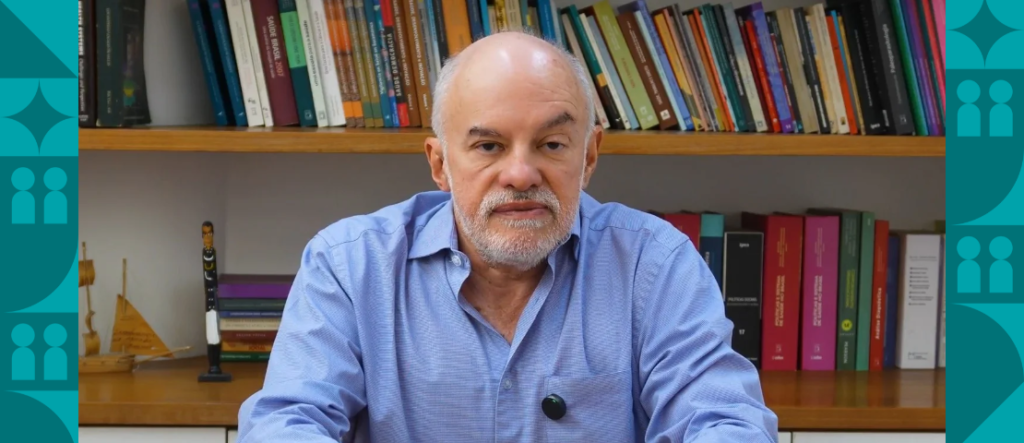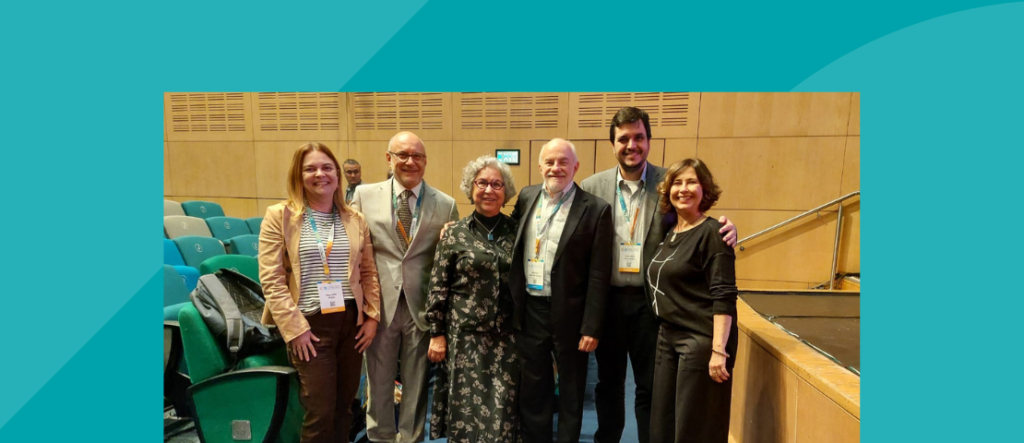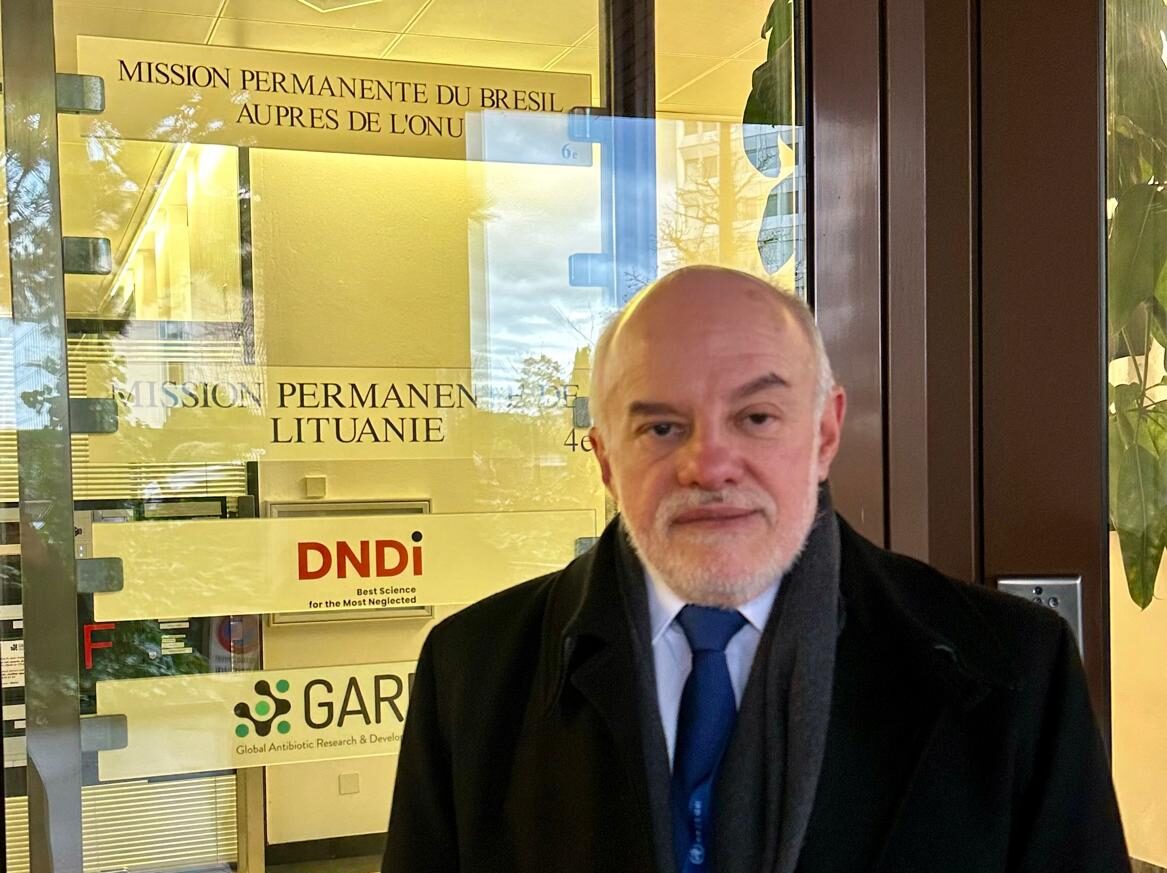
Pluralidade institucional, governança da Saúde, financiamento global, transferência de tecnologia, produção local e enfrentamento às desigualdades foram os temas que pautaram a exposição do coordenador do CEE-Fiocruz e presidente da Abrasco, Rômulo Paes de Sousa, no 4º Encontro da Força-Tarefa Conjunta sobre a Arquitetura Global da Saúde, realizado de forma presencial, em Genebra, segunda-feira, 16/11/2026.
O evento tratou do Relatório Preliminar da Força-Tarefa, que orientará reformas na Organização Mundial da Saúde (OMS) e suas unidades satélites, conforme decidido na 79ª Assembleia Mundial da Saúde, em maio de 2026. Rômulo participa do grupo pelo Brasil – o país, ao lado do México representa a Região das Américas.
Rômulo organizou sua exposição em cinco pontos. O primeiro deles tratando da coordenação institucional da arquitetura da Saúde. Ele alertou que é preciso reduzir a fragmentação e a duplicação, sem que, no entanto, a pluralidade institucional seja interpretada como ineficiência. “Apoiamos os esforços para melhorar a coordenação, desde que preservem essas funções essenciais e fortaleçam a capacidade do sistema global de saúde de responder às necessidades não atendidas”, observou.
Os comentários do pesquisador ao relatório preliminar trataram também a governança global da saúde, afirmando a centralidade da OMS, “ancorada firmemente na liderança e supervisão dos Estados-Membros”, com representação geográfica equitativa e “conexão clara” com as estruturas de governança existentes. Importância da participação da sociedade civil; salvaguardas quanto a conflito de interesses no que se refere aos atores do setor privado; restrições à criação de mecanismos paralelos de governança também foram destacados.
O terceiro ponto trazido por Rômulo referiu-se ao financiamento global da Saúde, que “deve refletir tanto as responsabilidades domésticas quanto as internacionais”. Para ele, o financiamento doméstico não pode substituir a solidariedade internacional, especialmente diante das restrições fiscais enfrentadas por muitos países em desenvolvimento”. O pesquisador chama atenção também para abordagens que possam levar a maior dependência de empréstimos externos. “A reforma deve explorar arranjos de financiamento inovadores e cooperativos, incluindo mecanismos de coinvestimento e conversões de dívida por saúde (debt-for-health swaps), propôs.
Transferência de tecnologia e produção local foram o quarto ponto salientado pelo coordenador do CEE. “O acesso equitativo a medicamentos, vacinas, tecnologias em saúde e inovação deve ser uma dimensão central da arquitetura global de saúde”, defendeu, enfatizando que a transferência de tecnologia, o fortalecimento das capacidades de pesquisa e o desenvolvimento e expansão da produção local e regional podem gerar “importantes ganhos de eficiência”.
Por fim, Rômulo tratou do enfrentamento às desigualdades estruturais e observou que a reforma da arquitetura global da Saúde pode ser uma oportunidade para isso, fortalecendo a cooperação internacional e ampliando as capacidades dos países de responder às necessidades de saúde de suas populações.
Como posição geral do Brasil sobre o relatório preliminar, Rômulo apontou que se trata de um “valioso passo adiante” e que o país apoia maior coerência, coordenação e eficiência, mas esses objetivos devem ser acompanhados por “compromissos mais firmes” com a equidade, a solidariedade internacional, o acesso equitativo a produtos de saúde, a transferência de tecnologia, a produção local e regional e o financiamento sustentável.
Acesse abaixo a íntegra do comentário (em inglês)
Brazil’s Comments on the Interim Report of the Task Force on Global Health Architecture – by Rômulo Paes de Sousa (Fiocruz/Abrasco)
Brazil would like to thank the Secretariat, the Co-Chairs, the Workstream Co-Leads and all members of the Task Force for their considerable efforts in preparing this interim report. We recognize the complexity of this process and consider the document an important contribution to the ongoing debate on the reform of the global health architecture.
We would like to highlight five main points.
1. institutional coordination must not come at the expense of essential functions.
Brazil recognizes the importance of reducing fragmentation, improving coordination and avoiding unnecessary duplication across the global health architecture.
However, institutional plurality should not automatically be interpreted as inefficiency. Many institutions and initiatives working on research and development, production and access to health products were established to address structural market failures, particularly insufficient investment and persistent inequalities in access to medicines, vaccines and technologies.
We therefore support efforts to improve coordination, if they preserve these essential functions and strengthen the capacity of the global health system to respond to unmet needs.
2. WHO must remain at the centre of global health governance.
Brazil believes that any new governance arrangement should reinforce WHO’s central role and remain firmly anchored in Member States’ leadership and oversight.
We would have difficulties supporting the establishment of an independent panel linked to WHO. We are, however, open to further consideration of a Coordination Platform, if it ensures meaningful participation by Member States, equitable geographical representation and a clear connection to existing WHO governance structures.
Civil society participation is also important. At the same time, we believe that the participation of private-sector stakeholders requires appropriate safeguards against conflicts of interest.
We should also avoid creating parallel governance mechanisms or additional bureaucratic structures that could undermine the very objectives of this reform.
Moreover, regarding regional authority and action, given that the mapping of regional actors, mandates and functions remains incomplete, we would suggest a more cautious formulation or, alternatively, the deletion of this general assessment until a more comprehensive analysis is available.
3. Global health financing must reflect both domestic and international responsibilities.
Brazil fully recognizes the importance of domestic resource mobilization for strengthening national health systems. However, this objective cannot be considered separately from international financial commitments.
Official development assistance commitments remain relevant and must continue to be part of the discussion. Domestic financing cannot substitute for international solidarity, particularly given the fiscal constraints faced by many developing countries.
We are also concerned about approaches that could lead to greater dependence on external borrowing. Rather than increasing debt vulnerabilities, the reform should explore innovative and cooperative financing arrangements, including co-investment mechanisms and debt-for-health swaps.
4. Equitable access, technology transfer and local production deserve greater prominence.
We believe that the reform should go beyond institutional efficiency and financial coordination.
Equitable access to medicines, vaccines, health technologies and innovation must be a central dimension of the global health architecture.
Technology transfer, stronger research and development capacities, and expanded local and regional production can generate important efficiency gains. They can enable countries to meet more health needs with available resources while strengthening the resilience and sustainability of their health systems.
These issues are particularly important for developing and middle-income countries and should be better reflected in the Task Force’s recommendations.
5. The reform must address structural inequalities and build international solidarity.
Brazil is concerned that the current balance of the report may give excessive emphasis to domestic resource mobilization, fiscal discipline and access to external lending.
Even if this is not the intention, such an approach could create the perception that developing countries are being asked to assume a disproportionate share of the financial burden, in a way that recalls previous structural adjustment programmes.
This would undermine the political support needed for a successful reform.
In our view, the reform should be an opportunity to address structural inequalities in the global health system, strengthen international cooperation and expand countries’ capacities to respond to the health needs of their populations.
In conclusion, Brazil considers the interim report a valuable step forward. We support greater coherence, coordination and efficiency, but these objectives must be accompanied by stronger commitments to equity, international solidarity, equitable access to health products, technology transfer, local and regional production, and sustainable financing.
A successful reform must not simply reorganize institutions or redistribute financial responsibilities. It must strengthen the capacity of the global health system to deliver better health outcomes, reduce inequalities and ensure that all countries can effectively protect the health of their populations.
Thank you.